Train with kind 1 diabetes is not simple, however it’s doable when you be taught the essential science of insulin, timing, diet, and cardio and anaerobic coordination.
This is a more in-depth take a look at secure train for individuals with kind 1 diabetes, with excerpts from my e-bookTrain for Sort 1 Diabetes”.
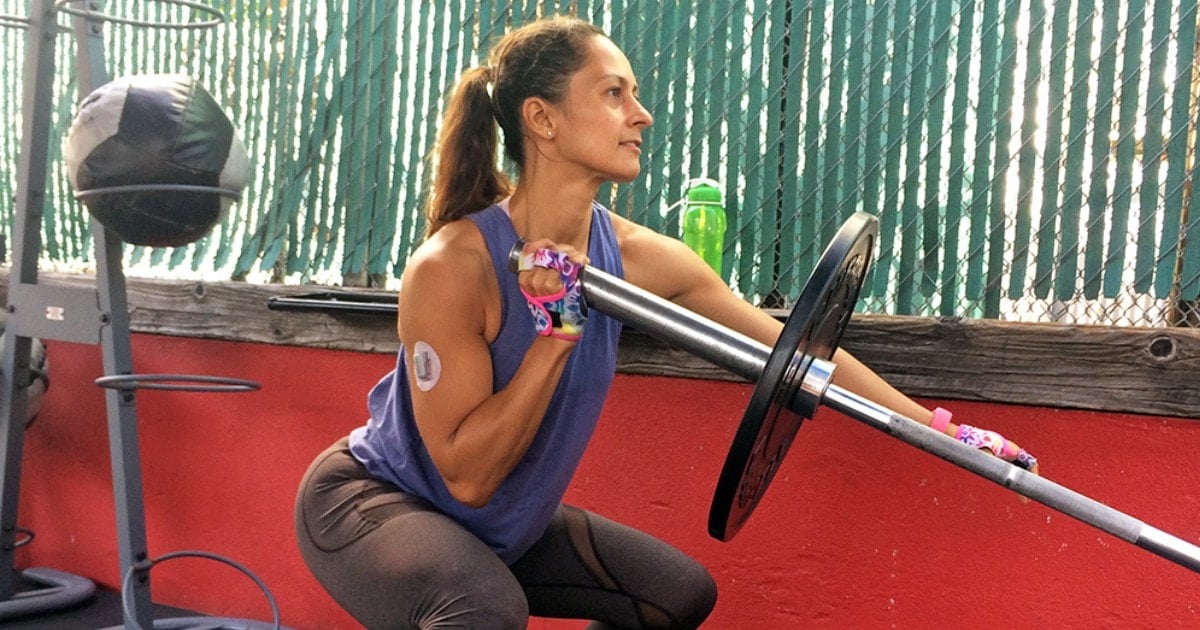
How a lot train do I want?
Common train has a huge effect in your physique weight, insulin sensitivity, and skill to handle your blood sugar ranges. The extra you proceed to train day by day, the extra advantages you’ll obtain.
The Facilities for Illness Management and Prevention (CDC) recommends at the least 150 minutes of moderate-intensity bodily exercise per week.
This works out to about 20-25 minutes per day. A little bit goes a great distance! (Do not underestimate the worth of standard walks.)
In case you incorporate common train into your day by day life, remember to plan along with your healthcare workforce tips on how to regulate your insulin dosage. There could also be a direct and gradual enhance in sensitivity to insulin. Because of this the dose of insulin (basal and/or bolus) have to be lowered to forestall hypoglycemia.
In-flight insulin administration
Protected train begins with managing your insulin onboard (IOB) and coaching timing. IOB refers back to the quantity of insulin at the moment lively in your bloodstream.
You probably have an excessive amount of IOB inside a number of hours of your exercise, you’re at very excessive threat for hypoglycemia.
There are three basic approaches to managing IOB to forestall hypoglycemia throughout train.
- Train after a meal or a number of hours after administering insulin for a meal
- Train instantly after meals, however scale back meal boluses and basal insulin
- Train while you really feel prefer it and eat a number of sweet and juice to get by way of it.
In case you soak up an excessive amount of or too little basal/background insulin from long-acting insulin injections or fast-acting insulin injections, your fasted train is not going to go as deliberate. Studying tips on how to fine-tune and regulate the background dose is a should.
Take into account that changes to basal/background insulin doses ought to be made in very small minor changes. For people who find themselves insulin delicate, don’t change greater than a complete of 1 or 2 items at a time.
For individuals taking greater doses, your physician could advocate bigger changes of three or extra items at a time. Observe the consequences for a number of days and regulate once more if obligatory.
Listed below are some basic items to contemplate when fine-tuning background insulin doses for fasted train:
Hypoglycemia throughout fasting train in all probability means: An excessive amount of basal/background insulin, whether or not cardio or anaerobic.
- If you’re receiving long-acting insulin: Generally small changes could make an enormous distinction. Lowering simply 1 or 2 items can fight these low blood pressures, however do not be shocked if you happen to want slightly extra in your eating regimen. Many individuals take an excessive amount of basal insulin. Because of this while you introduce some bodily exercise, blood sugar ranges repeatedly drop. Cut back your dose!
- If you’re utilizing an insulin pump: Most individuals discover that they should begin at 1 hour and scale back their basal fee by 25 to 75 %. in entrance Cardio train. Admittedly, it requires plenty of trial and error. Additionally, most individuals already regulate their basal charges to account for early morning spikes because of the daybreak phenomenon, so there aren’t as many elements to contemplate if you happen to’re pumping.
Elevated blood sugar ranges throughout fasted train could imply: Not getting sufficient insulin by way of basal/background or needing small boluses to cope with spikes brought on by anaerobic train or the daybreak phenomenon.
Anaerobic train will increase blood sugar ranges. Some individuals discover that they want a small bolus earlier than, throughout, or after intense energy coaching or different anaerobic train. That is regular! Experiment fastidiously and take good notes.
Small changes could make an enormous distinction. By merely including or subtracting 1 or 2 items out of your whole basal/background insulin dose, it is a lot simpler to soundly take pleasure in your exercises.
Why “fasted” train reduces threat bass
In case you can time your exercise to coincide with the time when your physique has the bottom quantity of fast-acting insulin (IOB), you possibly can considerably scale back your threat of hypoglycemia.
Within the context of kind 1 diabetes, the expression “fasted” train refers to exercising at the least a number of hours after your final meal and administering mealtime insulin. by exercising in entrance You are consuming and exercising while you’re not getting massive doses of fast-acting insulin pumped into your bloodstream. Most fast-acting insulins are totally lively within the physique roughly 4 hours after administration.
The fasting train is should not have It’s geared toward endurance sports activities, i.e. hours of train. It’s because throughout lengthy athletic competitions, the physique ultimately must be replenished with power.
“Fasted” train nonetheless requires basal/background insulin, even when the insulin pump dose is considerably lowered. If you’re utilizing long-acting basal insulin injections, you could have to progressively scale back your day by day dose as you add train to your day by day routine.
These of us dwelling with kind 1 diabetes want: some Lively insulin is at all times current to maintain you alive. With out adequate basal/background insulin always, individuals with kind 1 diabetes can shortly fall into diabetic ketoacidosis, which is extraordinarily harmful and probably deadly.
The “fasting” train shouldn’t be the identical always of the day. In case you prepare earlier than breakfast, your blood sugar ranges are likely to fluctuate much less as a result of hormone ranges like cortisol are nonetheless excessive from the evening. Coaching earlier than lunch if you happen to take insulin with breakfast is a very completely different animal.
aCardio and anaerobic train
To higher predict the consequences in your blood sugar and insulin wants, it’s worthwhile to be taught the distinction between cardio (cardio) and anaerobic train.
cardio train It’s an exercise that may run for a very long time with out stopping. Throughout cardio train, your coronary heart fee remains to be low sufficient that your physique can flow into oxygen to your fats cells to burn as gas. Alternatively, if IOB is ample, the gas supply could possibly be glucagon and glucose within the bloodstream.
Cardio train instance: Strolling, jogging, kayaking, curler blading, energy yoga, skating, vacuuming, gardening, biking, dancing, mountain climbing, chasing the children, and so forth.
Cardio train will increase the speed at which insulin takes up glucose and transports it to your cells. It’s because your cells require extra glucose to maintain your physique transferring and performing. In individuals with T1D, this may trigger dramatic hypoglycemia.
By fastidiously timing your coaching to cut back IOB, you possibly can considerably scale back the quantity of glucose consumed as gas throughout cardio train.
anaerobic train It’s often an exercise carried out at an depth that may solely be sustained for a couple of minutes at most. Then take a 30-second to two-minute break earlier than performing the subsequent spherical, and so forth.
Examples of anaerobic train: Weightlifting, sprints, crossfit, HIIT exercises, spinning intervals and extra.
As a result of the center fee throughout anaerobic train is so excessive, the physique should use glucose for gas by changing glucose (glycogen) and lactic acid saved in muscle tissue into glucose. That glucose is then circulated again to your muscle tissue as gas with slightly assist. Insulin.
For some sorts of anaerobic train, insulin from basal charges/doses could also be adequate. For extra intense anaerobic train, you could have to: extra Insulin manages that extra glucose.
After anaerobic train, the liver releases saved glucose from the liver, which can assist replenish intramuscular glucose shops. insulin. In individuals with T1D, this may trigger blood sugar ranges to rise unexpectedly.
Exercises that mix cardio and anaerobic train: When combining each sorts of train in a single exercise, it’s worthwhile to take into account the consequences of each.
For instance, if you happen to carry weights for half-hour, after that In case you jog for half-hour, the rise in blood sugar ranges brought on by weightlifting could also be offset by jogging, which lowers blood sugar ranges.
You may anticipate that the primary half-hour of cardio will are likely to decrease your blood sugar ranges (even when you have little or no IOB), after which the subsequent half-hour of weightlifting will trigger your blood sugar ranges to rise.
Like every other kind of exercise, combining cardio and anaerobic train requires cautious preparation, consistency in finding out what occurs, and good notes.
When to not traine
There are a number of conditions the place that is obligatory. should not have Train like a T1D affected person.
In case your blood sugar degree is above 250 mg/dL: Exercising with blood sugar ranges above 250 mg/dL can put you in danger for growing ketones, particularly if you do not have sufficient IOB. Cautious dosing of corrective insulin and train can decrease blood sugar ranges, however have to be carried out with ketones in thoughts. Ketone testing is necessary in case your pre-exercise blood sugar degree is above 300 mg/dL.
If you have already got ketone our bodies: Train containing ketone our bodies might be very harmful, growing ketone physique manufacturing and growing the danger of diabetic ketoacidosis (DKA). You probably have indicators of DKA, contact your medical workforce for help or go to your native emergency division.
Be ready for the worst and take notes
It doesn’t matter what kind of train you’re doing, you must at all times carry fast-acting carbohydrates similar to glucose tablets, juice, jelly beans, or gummies.
Make certain to take notes on the finish!
In case you expertise hypoglycemia after each Zumba class, that is a transparent signal that you are taking an excessive amount of insulin earlier than and through class.
In case your blood sugar ranges are constantly spiking an hour after your weightlifting exercise, it is a clear indication that you just in all probability want a post-workout bolus of fast-acting insulin.
Please take cautious notes. Fluctuations in blood sugar ranges throughout train might be very irritating. should not have Illogical. Take a deep breath and maintain experimenting.